would like a hardcopy of my CPF Yearly Statement of Account (YSOA). Where can I get it?
You can:
- Print your CPF Yearly Statement of Accounts (YSOAs) for the past 10 years via SingPass login at my cpf Online Services > My Statement.
- Have a hardcopy of your latest YSOA mailed to your registered address through our Interactive Voice Response System (1800-227-1188) by selecting the Statement Request option (code 2).
- Print your CPF YSOAs at the Citizen Connect Centres (CCC) in selected Community Clubs (CC). The CCC provides internet enabled devices for the public to perform selected transactions with government online (includes printing statements). Please refer to the locations of CCCs (PDF, 0.1MB) for more information.
You can check your Central Provident Fund (CPF) Statement any time by logging in to the CPF website with your SingPass. With My Statement, you can get an overview of your CPF account balances as well as view your transaction and contribution histories.
Here is all you need to know about the CPF Property Withdrawal Statement and a step-by-step guide to obtaining it!
What is The CPF Property Withdrawal Statement?
The CPF Property Withdrawal Statment is a document provided by CPF for CPF members which summarises all of the member’s property-related transactions using CPF.
Why is The CPF Property Withdrawal Statment Important?
With the statement, you can check the total principal amount withdrawn from your CPF and the accrued interest owed to CPF.
More specifically, the total principal amount withdrawn includes your:
- Payments for valuation / stamp / legal fees.
- Payments to the financier (banks etc.).
- Payments made to HDB / developer.
- Payments for lumpsum and housing loan.
- The monthly deduction for your CPF home loan instalments.
- and more.
In addition, the statement informs you about the amount that will be refunded to your CPF account upon the sale of your property as well.
What is it Needed For?
In general, you will need to submit the CPF Withdrawal Statement for home refinancing loan applications in Singapore even if you have not used CPF to service your existing home loan.
This includes applications for:
- Repricing of Home Loans*
- Refinancing of Home Loans*
- HDB to Bank Loan
- Bank Loan to Bank Loan
- Term Loan | Housing Equity Loan | Equity Term Loan.**
*FYI: Repricing refers to switching to a new home loan package within the same bank while refinancing refers to closing your current home loan account and setting up a new home loan account with another bank.
**A Housing Equity Loan, Term Loan or Equity Term Loan all refer to the same thing and are often used interchangeably.
A housing equity loan is where you can borrow money by using the equity of your property as collateral. They are also known as “second mortgages” or “cash-out refinancing”.
But, this type of loan is only available to private property owners and Housing Development Board (HDB) executive condominiums owners who have satisfied the Minimum Occupation Period (MOP) of 5 years.
Now that you know more about the CPF Property Withdrawal Statment, let us dive into how you can obtain it.
How to Obtain CPF Property Withdrawal Statement
Obtaining your CPF Withdrawal Statement is a simple four-step process:
1. Login to the CPF Website With Your SingPass
First, you will need to prepare your phone and Singapass login details.
You will then need to login to the CPF website with your SingPass.
2. Select “My Statement”
3. Scroll Down to Section C and Select ‘Property’

Click on the link which will bring you to the ‘My Statement – Property’ page.
4. Click on “My Public or Private Housing Withdrawal Details”
On the ‘My Statement – Property’ page, click on ‘My Public Housing Withdrawal Details’.
If you own private property, the page will provide a ‘My Private Housing Withdrawal Details’ link.

Clicking on the link will bring you to your CPF Property Withdrawal Statement which can be printed or saved as a PDF!
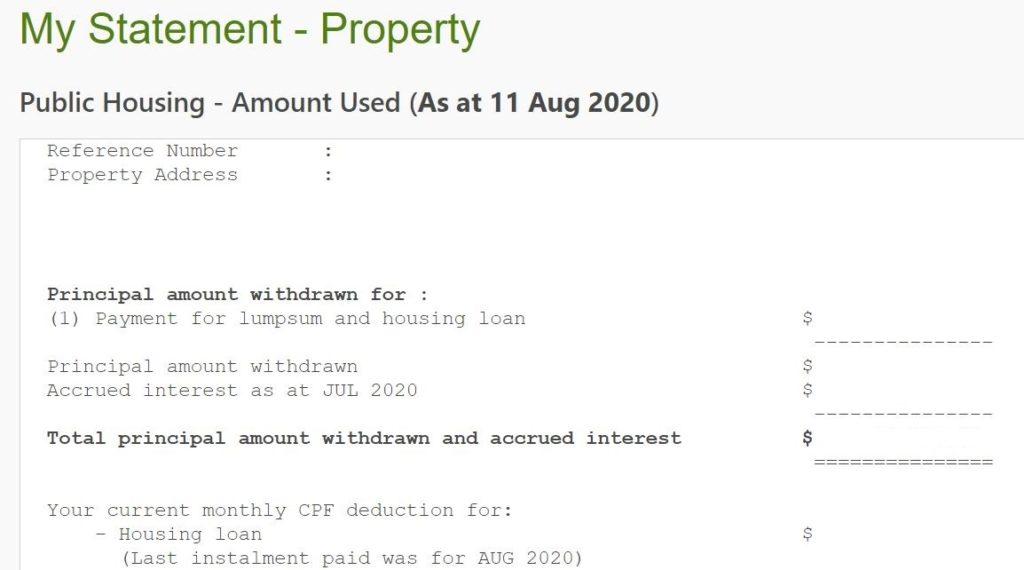
And there you have it your CPF withdrawal statement.
Hope you find this helpful!
Need Information or Confused about Something ?
Ask a Question
Sponsored Guide
Complete Guide to NSFAS Online Loan Application for South African Students (2025)
If you are a South African student looking to pursue higher education but are facing financial difficulties, the National Student Financial Aid Scheme (NSFAS) is one of the most accessible funding options available. NSFAS provides financial aid in the form of bursaries and loans to qualifying students at public universities and TVET colleges in South Africa.
This guide will walk you through everything you need to know about the NSFAS loan application process, from eligibility requirements to application steps and frequently asked questions.
📌 What is NSFAS?
The National Student Financial Aid Scheme (NSFAS) is a government-funded financial aid scheme aimed at helping students from low- and middle-income households to access tertiary education without the burden of upfront fees.
NSFAS offers both bursaries and income-contingent loans:
- Bursaries: For eligible students who meet academic and household income criteria (especially for TVET and university students).
- Loans: For students who do not meet all bursary criteria or who are pursuing postgraduate qualifications not funded under bursary schemes.
✅ Who Qualifies for an NSFAS Loan?
To qualify for an NSFAS loan (especially for postgraduate students or programs not funded under the bursary system), you must:
- Be a South African citizen.
- Be financially needy, with a household income of less than R350,000 per year.
- Have a valid South African ID.
- Be enrolled or accepted to study at a public university or TVET college.
- Not be funded through another bursary program that covers all expenses.
- Maintain satisfactory academic progress (returning students).
📚 Courses Funded by NSFAS
NSFAS primarily funds undergraduate qualifications, but certain postgraduate programs (e.g., PGCE, postgraduate diplomas in education, and professional courses like LLB) may be considered under the NSFAS loan scheme, not bursaries.
If you’re studying:
- Undergraduate degree or diploma: You are likely eligible for a full NSFAS bursary.
- Postgraduate study: You may qualify for a loan, depending on the course and funding availability.
📄 Required Documents for NSFAS Application
When applying, make sure you have the following documents scanned and ready:
- Certified copy of your South African ID or Smart Card.
- Parent(s) or guardian(s) ID documents.
- Proof of income (latest payslips, UIF, or affidavit if unemployed).
- Consent Form signed by your parent(s)/guardian(s) to allow NSFAS to verify income.
- Proof of registration or acceptance at a public institution.
- Academic transcripts (for continuing or postgraduate students).
🖥️ How to Apply for an NSFAS Loan Online
Step-by-Step NSFAS Online Application Process (2025)
-
Visit the NSFAS Website
Go to: https://www.nsfas.org.za
-
Create an Account
- Click on “MyNSFAS” and register your profile.
- You’ll need a valid email address and South African cellphone number.
- Choose a strong password and verify your account via email or SMS.
-
Login and Start the Application
- After registration, log in to your MyNSFAS account.
- Click on “Apply” to begin a new application.
-
Fill in Your Personal Details
- Input your ID number, name, surname, and other details exactly as they appear on your ID.
- Provide household income information and living arrangements.
-
Upload Required Documents
- Upload all supporting documents in PDF or JPEG format.
- Each document must be clear and under the size limit specified.
-
Submit Your Application
- Review your application for accuracy.
- Click “Submit” and wait for a confirmation message.
-
Track Your Application
- Log in regularly to check your application status.
- You will be notified via SMS and email at each stage of the process.
🗓️ Important NSFAS Dates (2025)
- Application Opening Date: September 1, 2025
- Application Deadline: January 31, 2026
- Appeals Period: February 2026 (if rejected)
- Disbursement: After registration and approval
Note: Dates are subject to change; always confirm on the official NSFAS website.
💸 What Does the NSFAS Loan Cover?
NSFAS funding typically includes:
- Tuition fees
- Registration fees
- Accommodation (if living away from home)
- Meals and transport
- Learning materials (e.g., textbooks)
For loans, repayment is only required once you start working and earn above a threshold (around R30,000 annually, but subject to change).
🔄 NSFAS Loan Repayment
Repayments are:
- Income-contingent – you only repay when you can afford to.
- Administered by DHET (Department of Higher Education and Training).
- Interest-bearing, but interest rates are low and favorable.
You can also apply for a partial loan conversion to a bursary if you perform well academically.
🔁 How to Appeal a Rejected NSFAS Application
If your application is rejected, you may submit an appeal via your MyNSFAS portal:
- Log into your MyNSFAS account.
- Click on “Track Funding Progress”.
- If rejected, click on “Submit Appeal”.
- Upload any missing or corrected documents.
- Provide a clear explanation or motivation.
📱 NSFAS Contact Information
- Website: https://www.nsfas.org.za
- Email: info@nsfas.org.za
- Toll-Free Number: 08000 67327 (Monday–Friday, 8 AM–5 PM)
- Twitter: @myNSFAS
- Facebook: NSFAS
📝 Final Tips Before Applying
- Apply early to avoid system overload near the deadline.
- Use your own email and cellphone number (do not use someone else’s).
- Double-check that all your documents are certified and legible.
- Keep a copy of your submission confirmation for reference.
By following this guide, you can confidently apply for NSFAS funding and move one step closer to achieving your academic and career dreams—without the burden of immediate financial pressure.